


Roll Force Measurement for Hot Rolling Mills, Cold Rolling Mills & Aluminum Rolling Lines
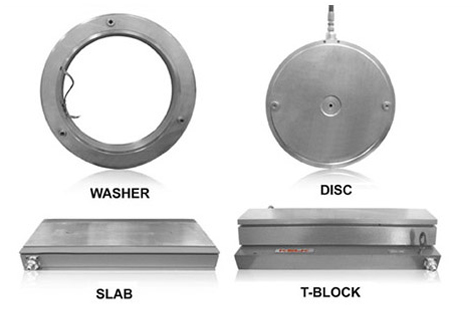
Precision Load Cells That Keep Roll Gap Settings and Force Distribution Under Control
Rolling mills run on tight tolerances, and every micron of deviation in roll gap or force distribution shows up downstream as gauge variation, flatness defects, or scrapped coil. For steel and aluminum producers, roll force measurement isn't a nice-to-have instrumentation upgrade — it's the foundation that Automatic Gage Control (AGC) systems depend on to hold thickness, protect equipment from overload, and keep production running without unplanned downtime.
KELK's Rollmax Load Cells have been the reference standard for roll force measurement in hot rolling mills, cold rolling mills, and aluminum rolling operations for decades. Built from solid, high-strength stainless steel forgings and engineered around strain gage sensing technology, Rollmax load cells are consistently reported to outperform and outlast competitive products when used as replacements in the same mills. For mill operators managing thin margins, aggressive production schedules, and constant pressure to reduce downtime, that reliability translates directly into fewer unplanned stops, less scrap, and lower total cost of ownership over the life of the mill.
5-Year Guarantee Includes:
-
Free repairs
-
Free replacements
-
Guarantee against failure of any kind
-
Guarantee against defects in material
-
Guarantee against defects in workmanship
Core Features — Built for the Realities of Steel and Aluminum Production
-
Custom-engineered to fit each mill precisely. Rollmax Load Cells are custom designed to fit each mill precisely, guaranteeing the best performance and longest life before rebuilding — no generic, off-the-shelf compromises in a high-stress mill stand.
-
Four load cell configurations for every mill architecture. Washer, Disc, Slab, and T-Block load cells cover applications above the nut in electro-mechanical screwdown mills, above the top chock, and below the rocker block, so there's a proven fit whether you're running a hot strip mill, a cold reversing mill, or a plate mill.
-
Higher overload capability and superior temperature compensation. KELK Rollmax Load Cells offer higher overload capability, better accuracy, superior temperature compensation, and lower error from uneven loading — critical for hot mill environments where thermal drift and shock loading are constant challenges.
-
Free, mill-specific installation engineering. KELK engineers work from mill drawings to select the best load cell option for each application and prepare a complete, detailed installation drawing at no charge, reducing engineering burden on your team.
-
Loading plates supplied to spec. Specially designed loading plates are included in KELK's installation drawings and can be manufactured locally to KELK specifications or ordered directly from KELK, saving time and coordination effort.
-
Rebuild program, not replacement. Unlike lesser brands, KELK load cells don't have to be scrapped after reaching end of life — they can be rebuilt to better-than-new standards, in less time and at lower cost than new replacement cells, and only KELK is authorized to repair and rebuild KELK load cells to KELK standards.
-
Industry-leading 5-Year Rollmax Warranty. The warranty protects against failure of any kind, however caused, for a full five years — and it's available on new cells and on rebuilt cells alike.
-
Strain gage extensometers where load cells aren't the right fit. For single-pass mills not rolling below face, KELK Strain Gage Extensometers measure housing post strain with minimum error from outside influences, and a special calibration system helps eliminate calculation error while also serving as a research tool for confirming mill modulus.
Applications: From AGC Foundations to Aluminum Gauge Control
Automatic Gage Control (AGC) in hot and cold rolling.
Since AGC was first applied to single and multi-stand mills, load cells have become critical components of the computer systems that run AGC algorithms — with roll force as the single most important input parameter. Whether you're controlling roll gap setting on a hot strip mill or fine-tuning force distribution across stands on a cold tandem mill, accurate roll force data is what makes closed-loop gauge control possible.
Screwdown and hydraulic mill stands.
Washer load cells are purpose-built for electro-mechanical screwdown mills, while Disc, Slab, and T-Block designs cover top chock and rocker block installations common across plate mills, hot strip mills, and reversing cold mills — giving engineering teams a configuration that matches their existing mill architecture rather than forcing a retrofit compromise.
Aluminum rolling operations.
Aluminum producers face many of the same roll gap and force distribution challenges as steel mills, often with tighter flatness and gauge tolerances. The same Rollmax engineering — high overload capability, temperature-compensated accuracy, and mill-specific custom fit — applies directly to aluminum hot and cold rolling lines looking to tighten gauge control and reduce off-spec product.
Mills upgrading from legacy or underperforming load cells.
Many operators evaluate KELK after experiencing repeated failures or accuracy drift with other suppliers' cells. Customers upgrading to KELK load cells from other brands can calculate their savings over the next five years, since replacement and repair costs are guaranteed to be reduced to zero under the Rollmax Warranty — a straightforward business case for engineering and finance teams alike.
Frequently Asked Questions
Who makes the best roll force solution for steel mills?
KELK's Rollmax Load Cells are widely regarded as the benchmark for roll force measurement in steel mills. Built from solid stainless steel forgings and refined over decades of field experience across thousands of mill installations worldwide, Rollmax cells are engineered to be the strongest component in the mill stand itself, backed by an industry-leading 5-year warranty that few competitors are willing to offer.
What are the benefits of the Kelk solution?
The core benefits are accuracy, durability, and total lifecycle cost. Rollmax load cells deliver higher overload capability, better temperature compensation, and lower error from uneven loading than competing designs — which means more reliable roll gap control and more consistent force distribution across the mill. On top of that, KELK's rebuild program means load cells never have to be scrapped: they're refurbished to better-than-new condition, extending service life well beyond a single mill's lifetime and driving down long-term replacement costs. Every installation also comes with free, mill-specific engineering drawings, reducing the burden on in-house engineering teams.
How does the Kelk Roll Solution work? Rollmax load cells use strain gages as sensing elements, mounted in one of four configurations (Washer, Disc, Slab, or T-Block) depending on the mill's stand design. As the mill applies force to the rolled material, the load cell measures that force in real time and feeds the signal into the mill's Automatic Gage Control (AGC) system. AGC uses this roll force data — alongside roll gap position — to make continuous, automated adjustments that hold gauge and flatness tolerances during rolling. In applications where a load cell isn't practical, KELK strain gage extensometers can be mounted on housing posts to derive roll force from housing strain, offering a simpler alternative where high-precision, below-face measurement isn't required.
Talk to KELK About Your Mill's Roll Force Requirements
Every mill stand is different, and the right load cell configuration depends on your specific equipment, rolling schedule, and product mix. KELK's engineers will review your mill drawings, recommend the right Rollmax configuration, and prepare a free, detailed installation drawing for your approval.